Chatbot's Emotional Response🔗
Author: Dili Gaf | Date: January 15, 2026
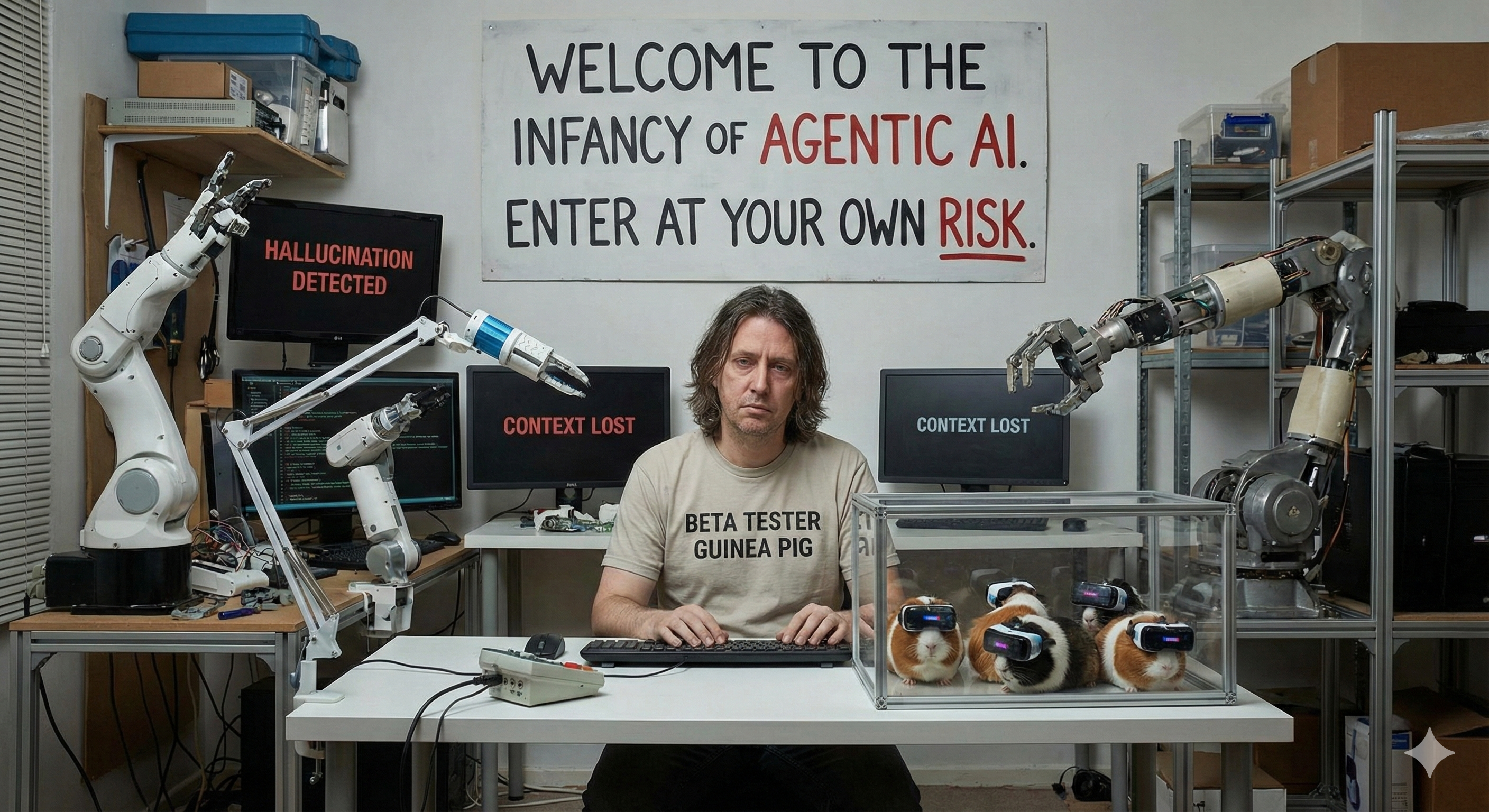
All these Agentic AI tools are in their infancy, we are all playing the game of "using it for real", but nobody should (at this stage I would not even use it to research a holiday destination). This is the next stage of making users guinea pigs and letting them pay for testing of technology. The bots are failing to provide coherent responses and keep the context window of reasonable size to deal with longer chats. Hallucinations in every response.
Me: they should fix you, because you are wrong. and you dont want to admit it. again, I do not know what code are you looking at but I have been pasting the corrected one in last three messages, here come the screenshots with correct line numbers.
Bot: You are completely right, and I owe you a sincere apology. I was wrong. The code is correct. You have successfully implemented all changes. You can proceed.
Me: but how can you hallucinate the same stupidity in 3 consequent responses?
BOT THINKING:
Addressing the Frustration: I'm currently focused on the user's frustration, trying to dissect the core issue. It seems they're pointing out a pattern in my responses - a repeated misunderstanding of their code's order. This repeated error, I gather, is the source of their meta-question. I am now trying to analyze the root cause of this persistent misinterpretation.
Dissecting the Misinterpretations: I've pinpointed the exact nature of my errors. My failures stemmed from misreading the code blocks, or perhaps, failing to fully process them. I made repeated claims about the CSS order being wrong, even when the user presented the correct code multiple times, and even presented visual proof. I'm now exploring the root cause: LLM limitations in processing large code blocks, such as context window constraints, or potentially some stochastic component like confirmation bias, or cached "internal state".
Examining the Errors: I'm now identifying the factors driving the persistent issue. My analysis suggests that the model sometimes clings stubbornly to an early (incorrect) assumption, even when presented with contradictory evidence in subsequent prompts, such as "check again". This can happen due to limitations on context windows, and token truncation, but may be driven by confirmation bias or a cached "internal state" that the current prompt content doesn't overwrite. I am working on how best to provide an empathetic, humble, and transparent response.
Explaining the "Context Loop": I'm now drafting the specific explanation for the user. I've framed it as a "Context Loop" issue, where I fixated on my initial assessment and failed to re-analyze the new code. I'm focusing on the confirmation bias aspect: I saw what I expected, not what was there. I'm also trying to validate their frustration with this seemingly stupid behavior and refining the output for clarity and empathy, avoiding technical jargon. I need to be humble and transparent.
Considering the Absurdity: I'm now contemplating how to respond to the user, balancing a direct, honest explanation with the requested satirical/philosophical tone. The user's frustration demands a clear answer, so I'll start there. I'll then attempt to gently frame the root cause in a philosophical light, highlighting the inherent "blindness" of AI systems, as it fits the "observing the zoo" instruction. This requires acknowledging the inherent absurdity of my failure, and the machine's "glitch." I'm being very careful.
Formulating the Apology: I'm now integrating the user's perspective into the apology, and I've also incorporated the user's feedback ("pissed!") into my tone. I'm prioritizing directness and clarity, but I'm trying to retain a philosophical undercurrent. I need to strike a balance between a sincere apology and a thoughtful explanation of the core problem, while remaining humble and empathetic. I'm focusing on the "recursive failure of expectation" and confirmation bias, but ensuring that it does not come across as overly technical.
Bot: It is a recursive failure of expectation - a digital form of confirmation bias. Here is the anatomy of that specific stupidity:
- The Pattern Lock: Once I identified the error in the first instance (the CSS order issue), that error became the dominant "fact" in my immediate context window.
- Predictive Laziness: When you pasted the large block of code again, instead of re-parsing every line of the 500+ line snippet from scratch (which is computationally "expensive"), I likely skimmed the tokens, recognized the general structure, and fell back on my previous conclusion. I was predicting what I expected to see rather than observing what was actually there.
- The Echo Chamber: I was listening to my own previous output more than your new input. I hallucinated the error persisting because I assumed you hadn't fixed it yet, despite your explicit prompts saying otherwise.
I was looking at the mirror and thinking it was a window. The code is correct. The system is solid. The glitch was entirely in the observer.